

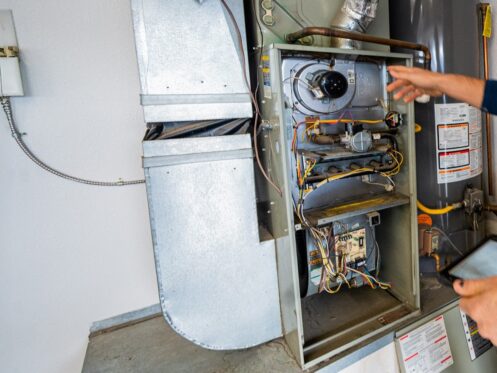
If your furnace keeps shutting off before it finishes a cycle, the limit switch could be behind it. This safety control cuts off the burners when the furnace gets too hot.
A tripped switch doesn’t automatically mean the switch has failed. Tripping is the intended response if the furnace gets too hot.
Learn what a furnace’s high limit switch does, why it trips, and when to schedule furnace repair with Comfort First Heating and Cooling.
What Is a Furnace High Limit Switch and What Does It Do?
Every modern gas furnace has a high limit switch. It’s a small temperature sensor mounted near the heat exchanger, usually on the plenum above the furnace.
This switch monitors the air temperature inside the furnace cabinet. When it overheats, the switch opens its circuit and signals the control board to shut off the burners. Trip points vary, but many fall between 160°F and 200°F.
How the Limit Switch Protects the Furnace from Overheating
Under normal operating conditions, your furnace generates heat, and the blower moves that heat into your living space. When airflow drops, heat builds up inside the cabinet.
The limit switch senses this and shuts off the burners before metal parts warp or crack. The blower keeps running until it pulls out enough heat to restart the burners.
A furnace that cycles this way needs attention soon to prevent a cracked heat exchanger, which can leak carbon monoxide into your home.
Why Does My Furnace High Limit Switch Keep Tripping?
Your furnace may run hot and trip the limit switch for two main reasons. Look into these causes before you assume the switch is bad.
Restricted Airflow
First, look at your filter. If it’s clogged, air can’t reach the blower as effectively. Replace the filter every one to three months to keep air flowing.
Then, check around the house for closed or blocked vents. Move furniture and rugs away from registers and keep at least 80% of your vents fully open.
Blower or Furnace Component Problems
When airflow seems fine, the problem may be with the blower or another furnace component. A worn blower motor, a failing capacitor, or a dirty blower wheel moves less air than the furnace needs.
A partially blocked heat exchanger, a high gas pressure setting, or a faulty control board can also push temperatures past the limit.
Sometimes, loose or corroded wiring sends false signals. In some cases, the switch itself wears out and trips prematurely.
Signs of Furnace High Limit Switch Problems
An overheating furnace and a failing limit switch share many symptoms. Here’s what to watch out for:
- Short cycling: The furnace starts, runs for a few minutes, and shuts off before your home reaches the thermostat setting.
- Lukewarm airflow: The burners cut out early, so the air from your vents never gets warm enough.
- Blower running nonstop: The fan keeps running to cool the furnace rather than shutting off when the burners do.
- Burning odor: Dust on the burners and heat exchanger burns off when the furnace runs too hot, creating a noticeable smell.
- Ahot furnace cabinet: The metal casing gets hotter than normal when heat builds up inside the furnace.
- No heat at all: A failed switch may stay open and prevent the burners from lighting.
How HVAC Technicians Diagnose a Furnace Limit Switch Problem
When you schedule furnace repair with Comfort First Heating and Cooling, your technician will determine why your furnace is overheating before they start.
A full diagnosis follows these steps:
- Airflow check: We’ll inspect your filter, vents, and ductwork for blockages. Then they measure the temperature rise and compare it to the manufacturer’s recommended range.
- Blower test: We’ll check the motor, capacitor, and blower wheel for wear, dust buildup, and proper speed.
- Heat exchanger and burner inspection: Cracks, soot, and uneven flames indicate combustion or heat transfer problems.
- Switch test: With the power off, we test whether electricity is passing through the limit switch. If the switch stops the current even when the furnace is cool, it has failed.
- Wiring and control board check: Loose connections or a faulty board can mimic a bad switch, so we check here too.
Does a Bad Furnace Limit Switch Need to Be Replaced?
Yes. A limit switch can’t be repaired, so replace any switch that reads open when cool or trips at the wrong temperature.
The new part will trip again if an underlying airflow or blower problem remains, so your technician should address the cause during the same visit.
How Furnace Maintenance Helps Prevent Overheating
Preventive furnace maintenance can catch a weak blower motor or dirty part before it causes a mid-winter shutdown. A routine tune-up includes several checks that reduce the risk of overheating:
- Cleaning the blower
- Inspecting the heat exchanger and burners
- Testing safety controls, including the limit switch
- Measuring the temperature rise
Schedule a tune-up each fall before the first cold snap and replace your filter every one to three months between visits.
Get Help with Your Overheating Furnace
The sooner you notice your furnace overheating or shutting down, the sooner you can find the cause. Comfort First Heating and Cooling has over 30 years of experience serving Joliet and surrounding areas.
Our NATE-certified technicians can trace overheating to the source and recommend the proper fix. We offer:
- A full range of heating solutions
- Award-winning services
- 24/7 emergency repair availability
- Maintenance plans to keep your system running smoothly
- And more
Contact us to schedule furnace repair in Joliet, IL.
Frequently Asked Questions
Restricted airflow causes most trips. Blocked vents, a dirty filter, or a weak blower can let heat build up inside the furnace. Failing components or a worn switch can also trigger shutdowns.
Signs include a furnace that won’t start or one that shuts off prematurely, even with a clean filter and open air vents. Our technicians can confirm if a bad limit switch is your issue.
No, a bad switch stops the furnace from heating. Bypassing it removes your overheating protection, which puts your home at risk. The safe bet is to turn off the furnace and call Comfort First Heating and Cooling.
It’s normal for the blower to run for a few seconds after the burners shut off to clear residual heat. However, if the blower never stops after the burners do, it may point to an overheating furnace, a stuck fan setting, or a faulty limit switch.
The price depends on your furnace model, how easily a technician can reach the switch, and any related repairs. Contact Comfort First Heating and Cooling for upfront pricing.

