

When the power comes back on after an outage, you expect your air conditioner to start cooling again. But sometimes, you may find your AC blowing warm air, the outdoor unit not running, or the AC not working at all.
A power outage can trip breakers, reset thermostat settings, or affect electrical parts inside your cooling system. Some problems are easy to fix, while others require professional AC repair.
If your AC isn’t cooling after an outage, there are a few safe things you can check before calling for AC repair in Joliet, IL.
Why Power Outages Trip AC Breakers
Your AC breaker may trip when the power goes out or comes back on to protect the system from electrical problems. This can shut down the indoor unit, outdoor unit, or both, causing your AC to blow warm air.
Resetting the breaker once may fix the problem. If it trips again, don’t keep resetting it. Call a professional to check for an electrical issue.
What Should You Check Before Calling for AC Repair?
If your AC isn’t working after a power outage, you can try a few simple troubleshooting steps. Don’t remove equipment panels, touch wiring, or try to repair electrical parts yourself.
Reset the Circuit Breaker
Start by checking your home’s electrical panel. Look for the breaker marked AC, air conditioner, HVAC, or outdoor unit
If the breaker has tripped, push it all the way to the “off” position before switching it back to “on.” Then, wait a few minutes to see if the AC starts.
It’s safe to reset the breaker once. If it trips again, leave it off and call an HVAC professional. Repeatedly resetting a breaker can be unsafe and may cause more damage.
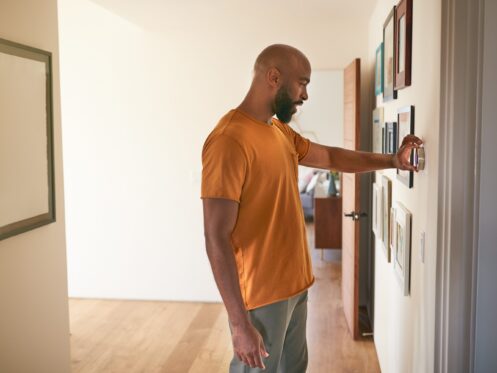
Check the Thermostat Settings
A power outage can reset some thermostats or change their programmed schedules.
Make sure your thermostat is set to “cool,” and the temperature is lower than the current indoor temperature. If the thermostat uses batteries, replace them if the screen is blank or isn’t responding.
You should also check your programmed schedule. The outage may have reset your normal cooling settings.
Wait for the System’s Built-In Restart Delay
Your AC may have a built-in delay that keeps the compressor from restarting too quickly after power returns. Wait at least five minutes for the system to restart, and avoid repeatedly adjusting the thermostat or breaker.
Make Sure the Outdoor Condenser Is Running
If your AC is blowing warm air, check whether the outdoor unit is running. If it’s off while the indoor blower is running, the problem could be a tripped breaker or electrical damage.
If the outdoor unit still won’t start after checking the breaker and waiting several minutes, call a professional.
Check the Air Filter
A dirty air filter may not be caused by the outage, but it can make cooling problems worse.
When the filter is clogged, less air can move through your AC. Your home may take longer to cool, and the air coming from the vents may not feel as cold as it should.
Check the filter and replace it if it’s dirty. Regular filter changes can help your AC work better and prevent added stress on the system.
When Does a Power Outage Damage an Air Conditioner?
Most air conditioners start working normally after power is restored. However, a strong power surge can damage electrical parts inside the system.
Power surges can affect control boards, contactors, disconnects, wiring, and other parts. This damage isn’t always easy to see.
If you’ve tried basic troubleshooting and your AC still isn’t cooling, a technician should inspect the system and find the cause.
Compressor Failure
The compressor moves refrigerant through your AC to help cool your home. A power surge can damage it, causing the outdoor unit to stop working or make unusual noises. Compressor problems require professional AC repair.
Capacitor Failure
The capacitor helps your AC’s motors and compressor run. A power surge can damage it, causing startup problems or unusual noises.
Because capacitors can hold an electrical charge, repairs should be handled by an HVAC technician.
Signs You Need Professional AC Repair
Basic troubleshooting can sometimes get your AC working again. But if the problem continues, it’s important to know when to call a professional.
Schedule AC repair if you notice:
- Your AC continues blowing warm air
- The outdoor unit won’t start
- The breaker trips more than once
- You smell burning or electrical odors
- You hear buzzing or clicking noises
- Ice forms on the refrigerant lines
- The AC keeps starting and stopping
These problems may be caused by electrical damage, failed parts, refrigerant issues, or other AC problems. Continuing to run the system could lead to more damage.
How to Protect Your Air Conditioner During Future Power Outages
You can’t prevent every power outage, but you can help protect your AC. Whole-home surge protection can reduce the risk of electrical damage, while annual AC maintenance and regular filter changes can help prevent breakdowns.
After an outage, wait for the power to stabilize before restarting your AC. Comfort First Heating and Cooling also offers maintenance plans to make regular HVAC care easier.
Restore Cooling Comfort with Comfort First Heating and Cooling
An AC blowing warm air after a power outage doesn’t always mean you’re facing a major repair. The problem may be a tripped breaker, a thermostat that reset, or a system that’s still waiting to restart.
But if you’ve checked the basics and your AC still isn’t cooling, don’t keep trying to reset the system. Electrical damage and failed parts need to be checked by a professional.
With over 30 years of experience, Comfort First Heating and Cooling provides AC repair for homeowners in Joliet, IL. We offer 24/7 emergency service, upfront pricing, and instant online HVAC quotes.
If your AC isn’t working after a power outage, schedule AC repair with Comfort First Heating and Cooling today.
Frequently Asked Questions
Most air conditioners work normally after power is restored. However, a strong power surge can damage electrical parts, including capacitors, control boards, contactors, and compressors. If your AC isn’t working after basic troubleshooting, schedule professional AC repair.
The indoor blower may be running while the outdoor unit is off. Electrical damage, refrigerant problems, a failed capacitor, or compressor trouble can also prevent your AC from cooling properly.
You can reset the AC breaker once if it has tripped. Make sure the thermostat is set to cool and wait several minutes for the system to restart. If the breaker trips again or the AC still isn’t working, call a professional.
Wait at least several minutes after power is restored. This gives the power time to stabilize and allows the AC’s built-in restart delay to protect the compressor before the system starts cooling again.

