

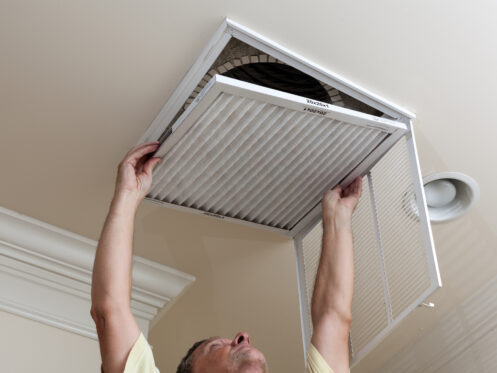
When it comes to preparing your air conditioning system for the upcoming summer season, you want to ensure that you follow our 14 AC maintenance tips. This will confirm that your system is operating safely and efficiently to keep your energy bills in check. It also goes a long way in helping to reduce your breakdown risk and giving you more peace of mind about the reliability of your home cooling system.
1. Change Air Filters
One of the most important AC maintenance steps is changing your air filters. Your system’s filters remove airborne contaminants before they penetrate your unit. If the filter gets too dirty, it can restrict airflow and significantly reduce system performance. We suggest checking your air filter every month and replacing it as necessary. Always having a spare air filter ready to go will ensure that you do a replacement whenever it’s needed instead of putting it off.
2. Inspect Ductwork
Ideally, you will inspect your ductwork before the summer season starts. Look for any visible damage or any excessive debris. Having a professional perform AC repair on your ducting system can ensure that all the cold air your system produces reaches the rooms in your home. If there’s excessive debris inside your ducting, you may want to consider investing in a professional duct cleaning service.
3. Clean Return Vents
The return vents for your HVAC system can develop dust and grime over time. Wipe the surface of your vents in early spring to prevent dust and other airborne contaminants from reentering your indoor air and reducing its quality. Be sure to wipe all the vents for each room of your home.
4. Clear Debris Around the Outdoor Unit
For your outdoor condenser unit to function optimally, it needs adequate airflow. We recommend two to three feet of clearance around your outdoor unit. Any AC maintenance checklist must include clearing away debris within that area.
5. Trim Foliage Around the Outdoor Unit
You should be trimming back any shrubbery or greenery that could otherwise restrict airflow. Make sure that you’re cleaning up any leaves or other debris that could prevent your system from functioning optimally. You may even want to consider installing a small wind fence a few feet back from your condenser unit to catch any blowing debris before it lands against your condenser unit.
6. Check Thermostat Settings
The best way to maximize your summertime energy savings is by properly setting your thermostat. It’s important that you set the temperature differently for times when you’re away from home and when you’re at home. When you’re at home, aim for a setting around 78 degrees. When you’re away from home, you can increase the temperature by a few degrees to reduce your AC system’s runtime. This will reduce energy consumption and lower your utility bills throughout the entire summer season.
7. Inspect Refrigerant Lines
Refrigerant is the lifeblood of your air conditioning system. While checking your refrigerant level and recharging are necessary parts of a professional air conditioning tune-up, there are some things that you can check as a homeowner. First, inspect the refrigerant lines, checking for rust, damage, or leakage. If you notice any of these issues, call for prompt AC repair service. If your system doesn’t have adequate refrigerant, it cannot remove enough heat from your home to keep your indoor environment comfortable.
8. Clean the Condenser Coils
The condenser coils for your outdoor AC unit are responsible for releasing heat to the air outside. If these coils get covered with dirt and grime, your system cannot release the heat efficiently. This can leave your home feeling uncomfortably warm. Your HVAC technician can clean your AC condenser coils during your air conditioning tune-up.
9. Seal Air Leaks
Anywhere that there are air leaks on your exterior walls, hot outside air can penetrate your home. It’s important to take the time to seal off potential leaks every spring so you can better maintain your indoor temperature. For example, caulking and weatherstripping around your door and window frames can seal up known air leaks.
10. Insulate Your Home
While you may be focused on AC maintenance, consider the effect that insulation has on your HVAC system’s performance. If your home has poor or no insulation, it’s much harder for your HVAC system to maintain a comfortable indoor environment. This is especially true during the worst of the summertime heat.
Investing in quality insulation in both your attic and around your ductwork can help you maintain a more stable indoor environment. When you’re able to maintain a stable indoor temperature, your HVAC system runs less often, leading to lower energy consumption. This translates to reduced energy bills for you throughout the entire summer.
11. Listen for Strange Sounds
A normal air conditioning system will produce a low, steady humming sound when it’s running. You may hear a soft whooshing or airflow noise from your air vents as air circulates throughout your home. When your air conditioning system first turns on, it emits a gentle clicking sound. All of these sounds are consistent and non-disruptive. If you experience any abnormal sounds coming from your system, it can indicate an internal problem.
Loud banging or clanking can indicate a loose or broken internal component. Hissing may suggest a refrigerant leak, while buzzing can signal an electrical issue. Squealing or grinding often points to a belt or motor problem. If any of these sounds occur, it’s important to reach out for prompt AC repair before the problem gets any worse.
12. Pay Attention to Strange Odors
When testing your system during your air conditioning tune-up, it shouldn’t produce any noticeable smell. Abnormal odors can signal an underlying problem with your unit. A musty or moldy smell often indicates mold growth inside your ductwork or air conditioning system. A burning or electrical smell may suggest overheating components, wiring issues, or even a failing motor. A chemical-like smell can point to a refrigerant leak. If you’re noticing any of these strong, persistent odors, it’s important to reach out for fast AC repair.
13. Use Ceiling Fans to Supplement Your AC
One of the best strategies for reducing your cooling bills throughout the summer is to supplement your AC with ceiling fans. Putting ceiling fans in your bedrooms, living rooms, and even your kitchen can help you to be more comfortable while enjoying time in those spaces. Be sure to turn your ceiling fans in a counterclockwise direction so that they’re forcing a gentle breeze down onto you. This will make your body feel cooler, so you can set your thermostat temperature a little higher without noticing any difference in comfort.
14. Request Professional AC Maintenance
One essential part of getting your cooling system prepped for the summer ahead is scheduling a professional air conditioning tune-up. This service is necessary to ensure efficient and safe system operation while maintaining your warranty coverage. It gives you critical insight into how much longer your unit is likely to last and also goes a long way in reducing your breakdown risk. Comfort First Heating and Cooling is a trusted area expert when it comes to everything heating and cooling in Joliet, IL and the surrounding communities.
Contact us today to schedule your next AC maintenance appointment!

