

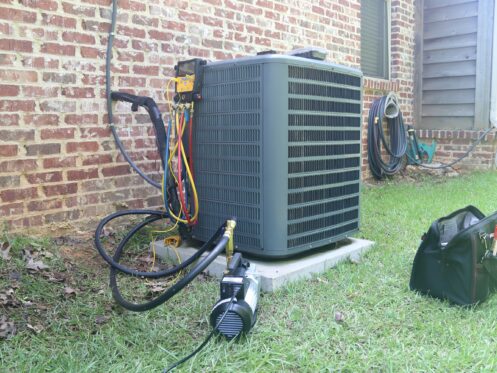
When your air conditioning compressor doesn’t kick on, the system may not run at all or may not cool your home. Common causes for this frustrating issue include thermostat or power problems, a failed capacitor or contactor, dirty components, low refrigerant, overheating, and compressor failure.
While Joliet homeowners can perform a few basic checks safely, it’s critical to leave electrical and refrigerant problems to the professionals.
In this article, the team at Comfort First Heating and Cooling will discuss typical reasons why an AC compressor won’t work, along with tips for restoring your comfort.
AC Compressor vs. Indoor Air Handler Problems
Your AC compressor is in the outdoor unit that circulates refrigerant to remove heat from your home. When it isn’t working properly, the system can’t move heat from inside your house to the outdoors.
Determining if your issue is the compressor or indoor air handler can be complex. The general question comes down to airflow and cooling:
- Compressor issue: Your system produces plenty of air, but it’s not cold.
- Air handler issue: You don’t feel enough airflow from your vents.
Start by examining your outdoor unit to make sure it starts and listen for unusual noises.
Why Does My AC Compressor Keep Turning On and Off?
Short cycling is a common problem for homeowners struggling with insufficient cooling. Short cycling is when your compressor starts and stops before a full cooling cycle can be completed.
Continuous short cycling increases energy use and places additional stress on your equipment. Your system also won’t be able to achieve your desired indoor temperatures.
The causes of short cycling are the same as those for a compressor that won’t start, so you need an HVAC technician for accurate diagnosis.
Why Is My AC Compressor Not Working?
If you’re wondering why your AC compressor won’t turn on, it could be a variety of issues, and not every issue requires professional AC repair.
Determining the root cause on your own is difficult, as similar symptoms can have very different causes. Compressor failure isn’t always the issue, either.
The problem could be any of the following:
Incorrect Thermostat Settings or a Faulty Thermostat
Before calling for a professional AC inspection, you’ll want to ensure that your thermostat settings are correct. Make sure that:
- The system is set to “cool.”
- The fan is on “auto.”
- The temperature setting is below the current room temperature.
- The batteries are working.
If you notice error codes or inaccurate temperature readings, the problem may be with the thermostat itself. An HVAC technician can troubleshoot and recalibrate your thermostat.
Tripped Breaker, Blown Fuse, or Shutoff-Switch Problem
As with any electrical appliance, a power outage will prevent your outdoor unit from starting. However, it’s important for homeowners to remember that electrical issues are never DIY fixes.
You can inspect your electrical panel for a tripped breaker and reset it if needed. If the breaker continues to trip, you likely have an electrical or equipment problem that needs professional service.
Failed Capacitor, Contactor, or Wiring
Your AC compressor may not stay on due to a capacitor issue. This component helps the compressor start, while the contactor and wiring deliver power to the unit.
Signs that this may be the problem include:
- Continuous clicking sounds
- Humming sounds
- The AC fan runs when the compressor is off
- The fan won’t spin
Never open the condenser cabinet because capacitors can retain a dangerous charge. Call an HVAC technician who can safely service your air conditioner.
Dirty Air Filter
A clogged air filter restricts airflow, makes your AC work harder, and may cause your system to overheat or shut down. It’s important to replace your air filter every one to three months to avoid this issue.
Start by checking the filter and replacing it if it is visibly dirty. If that doesn’t help, you have another problem on your hands.
Dirty Condenser Coil
Dirt and debris on the outdoor condenser coil will prevent your AC from releasing heat efficiently, potentially causing the compressor to overheat or stop running.
You can clear loose debris around the unit yourself. However, you should leave AC cleaning services, such as coil cleaning, to an HVAC professional.
Low Refrigerant or a Refrigerant Leak
Incorrect refrigerant pressure can interfere with cooling and may trigger protective controls that cause your compressor to stop working. This may be the issue if you experience:
- Weak cooling
- Ice buildup on the unit
- Hissing sounds
Refrigerant should never be handled by a homeowner. Call a qualified HVAC technician for a comprehensive refrigerant diagnosis and repair.
Overheating or Internal Compressor Failure
Sometimes your AC compressor will shut off as a safety precaution. This is often the case for thermal overload, worn internal components, or a burned-out compressor.
Trust a technician to determine whether your compressor can be repaired or whether replacement is the practical option.
What Can You Check Before Calling for AC Repair?
While homeowners should not test capacitors, handle refrigerant, bypass safety switches, or attempt compressor wiring repairs, you can follow these simple troubleshooting steps:
- Confirm proper thermostat settings.
- Replace dirty air filters.
- Check the breaker and reset it if needed, but only once.
- Clear leaves and loose debris from around the condenser.
- Note any humming, clicking, burning odors, ice, or leaking fluid.
- Turn the system off if it repeatedly trips the breaker, overheats, or makes severe noises.
What Are the Signs of an AC Compressor Failing?
Knowing when your air compressor is failing can help you act proactively and prevent a complete AC breakdown in the summer heat.
If your AC compressor won’t turn on, you may also notice:
- Warm air
- Weak cooling
- Delayed starting
- Hard starting
- Persistent humming sounds
- Repeated short cycling
- Repeated breaker trips
- Unusually high energy bills
Should You Repair or Replace a Failing AC Compressor?
How you address a failing AC compressor depends on a few factors:
- System age
- Warranty coverage
- Repair history
- Overall system condition
- Refrigerant type
- Repair cost compared with a full AC replacement
To avoid any unnecessary costs, request a complete diagnosis from a professional before assuming you need a new compressor or AC system.
Schedule AC Compressor Repair in Joliet, IL
An AC compressor that won’t turn on can be caused by anything from a simple thermostat or airflow issue to a dangerous electrical fault or major component failure.
To protect your safety and ensure your total comfort, stop repeated resets and schedule professional AC repair with Comfort First Heating and Cooling. Our team of expert technicians is available 24/7 for HVAC emergencies in Joliet and the surrounding areas.
We’re committed to restoring your indoor comfort, and with over 30 years of experience, we stand behind our work with a No Breakdown Guarantee.
Call Comfort First Heating and Cooling today to schedule a full AC inspection and diagnosis in Joliet.

